Skip to content

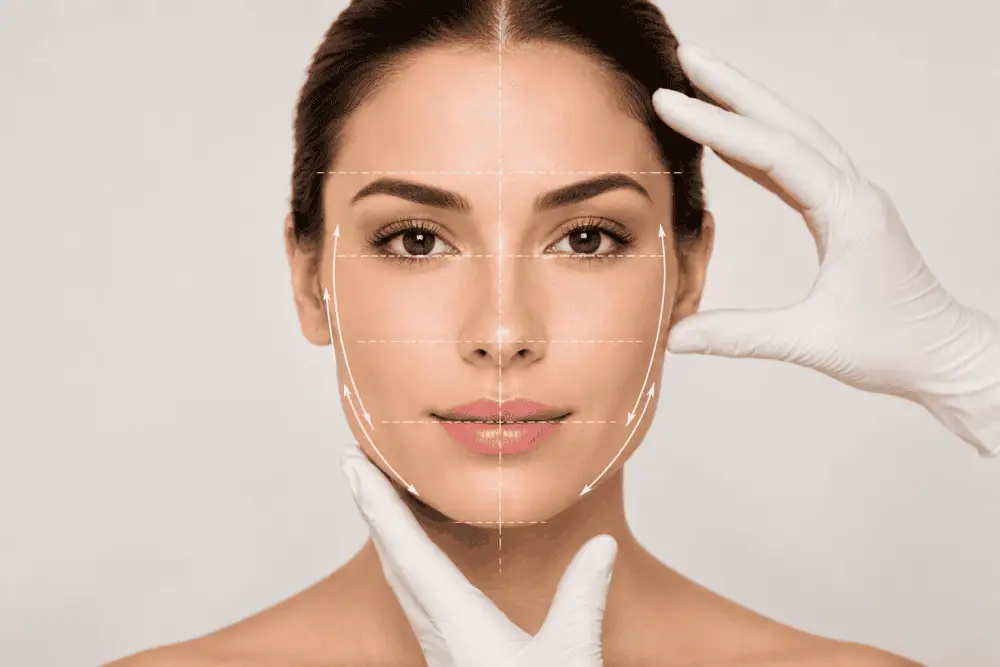
Table of Contents
Most patients arrive with one thing on their mind: a chin that softens in photos, a cheek that has lost support, lips that never look quite even. Facial balancing begins somewhere else. It starts with how those features relate to one another before any product is placed.
At RefineKC Aesthetics, our providers use injectables to improve facial proportion rather than maximize change in one area. Here is what that involves, why single-feature treatment sometimes leaves patients wanting more, and how we build a whole-face plan.
What is facial balancing with fillers?
Facial balancing is an injectable approach that assesses the entire face, then places filler in small, deliberate amounts across several areas to improve facial symmetry and proportion, considering how each feature affects how the others are perceived.
What Facial Balancing With Fillers Actually Means
Facial balancing is an assessment approach first and a treatment second. Before any injection, a provider evaluates facial structure as a whole, including areas the patient hasn’t mentioned. Dermal filler is then placed in measured amounts across multiple regions rather than concentrated in one spot.
The intent behind full facial balancing is proportion and symmetry between features, not the largest possible change to any single one. Standard filler targets a specific area and does it well. Facial harmonization asks a different question: how do these areas work together, and which adjustments would improve their relationship?
Why Treating One Feature in Isolation Often Falls Short
A feature stands out because of what surrounds it. Patients usually identify the feature they dislike accurately, though the reason it draws attention often sits nearby. A chin can read as small partly because of limited jawline projection, not only because of chin size itself.
Adding volume to one area without accounting for its neighbors can occasionally make an imbalance more noticeable rather than less. None of this makes single-area filler a poor choice. For a patient with one clear concern and otherwise even proportion, treating that area directly is often the right call. Facial balancing is simply a different way to assess the same face.
How Facial Proportion Actually Works
Providers evaluate the face in thirds: roughly forehead to brow, brow to the base of the nose, and nose to chin. Profile relationships are considered as well, meaning how the forehead, nose, lips, and chin align when viewed from the side. The eye reads relationships between features before it reads any single one.
Volume loss in one region shifts how nearby regions appear, even when those regions have not changed at all. Genetics, aging, and natural asymmetry all influence proportion. Nearly every face is asymmetrical to some degree, so improved facial symmetry means reducing noticeable imbalance rather than erasing what makes a face distinctive.
The Areas That Tend to Work Together
Certain regions are almost always evaluated as a group. The chin and jawline shape the lower face and profile together, so jawline contouring and chin definition are usually planned as one decision rather than two. Treating them separately risks improving one while leaving the other slightly out of step.
Midface support influences how the under-eye area and surrounding structures appear, so cheek enhancement is often assessed alongside concerns a patient describes as tiredness or hollowing. Lip proportion is read against chin projection and lower-face structure, never judged on its own. A provider looking at lips alone may treat them correctly and still miss what the patient actually wanted.
How a Provider Builds a Whole-Face Plan
Assessment comes before product selection. That evaluation covers facial structure, prior injectable treatments, how the face moves during expression, and what the patient hopes to change. Treatment is then sequenced, often addressing structural support before finer detail, since the foundation affects how later placements settle.
At RefineKC Aesthetics, our providers use ultrasound guidance to visualize the treatment area in real time, which supports accurate placement in anatomically dense regions of the face. Not every plan is completed in a single visit. Staged treatment is common when several areas are involved, and it allows each phase to settle before you make the next decision.
What a Balanced Result Looks Like in Practice
A balanced result typically means features read in proportion to each other, with no single area pulling focus. Most patients notice an improvement in their profile and overall facial symmetry before they can identify exactly what changed. Many describe the difference as looking more even or more rested rather than treated.
Outcomes vary based on anatomy, the products used, and individual response. Some improvement is visible immediately, though swelling is normal early on and results generally settle over about two weeks. Your provider will discuss what is realistic for your features during the planning stage.
Who This Approach Tends to Suit
Facial harmonization often suits patients concerned about asymmetry, volume loss affecting overall balance, or definition along the profile. It also suits patients who have had filler in one area before and felt the result, while technically fine, did not deliver what they were hoping for.
Filler is a minimally invasive treatment performed by trained medical providers. Mild swelling, redness, or bruising can occur and usually resolves within a few days. Candidacy depends on anatomy, health history, and goals, and is determined during a consultation, not online.
Common Questions About Facial Balancing With Fillers
Facial balancing is not simply filler placed in several locations. Multiple treatments can be performed without a unifying plan, while balancing means each placement was decided in relation to the others. It also does not always require more product, since small amounts placed strategically across regions can improve proportion more visibly than a larger volume in one spot.
It combines readily with other treatments. Neurotoxins, biostimulators, and skin treatments are frequently part of a broader plan, and your provider will advise on sequencing. As for whether people notice, most patients report that others comment that they look rested or well without identifying a specific treatment.
Talk Through Your Facial Balancing Options in Kansas City, MO
If one feature has been bothering you, it may be worth understanding how the rest of your face factors into it before deciding on anything. Our team evaluates structure, proportion, and symmetry together, then explains what a realistic plan would involve for your anatomy and goals.
Patients considering facial balancing Kansas City MO are welcome to start with a conversation rather than a commitment. Discover how a personalized approach can enhance facial harmony—schedule your consultation today.