Skip to content

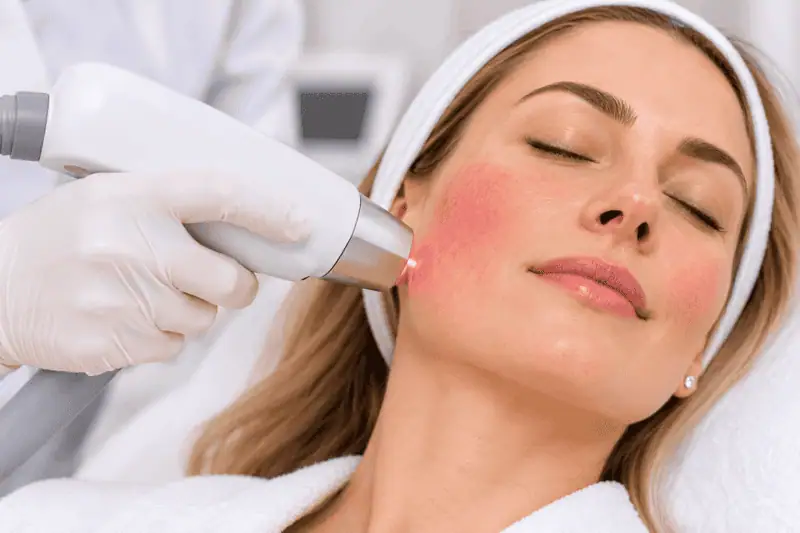
Table of Contents
Yes, Aerolase for rosacea can meaningfully soften persistent flushing, visible redness, and the broken capillaries that come with the condition. The reason is simple: the laser energy reaches the dilated blood vessels that create the color, rather than sitting on the surface like a cream. At RefineKC Aesthetics, many patients who ask about Aerolase rosacea treatment have already tried gentle cleansers, color-correcting makeup, and prescription topicals, but the redness never truly settles.
Here is what Aerolase rosacea in Kansas City, MO, actually does for rosacea, which presentations respond best, and what realistic results look like over time.
Does laser treatment actually work on rosacea redness?
Aerolase delivers laser energy that the widened vessels behind rosacea absorb, which collapses those vessels so the body can clear them over the following weeks. Most patients see redness soften across a short series of sessions. Rosacea is ongoing, so results are maintained rather than permanent, and a provider confirms fit first.
What Causes the Redness in Rosacea
Rosacea is a chronic inflammatory skin condition, not a sign of poor skincare habits or simply having sensitive skin. The characteristic color comes from two things happening together: dilated surface blood vessels (clinically known as telangiectasia) and ongoing inflammation in the skin.
That combination explains why topical products and makeup can calm or camouflage a flare without changing the baseline. The vessels remain, dilated and visible, once the product wears off. Facial redness can also stem from other conditions, which is why a provider assesses you before recommending any rosacea treatment plan.
How Aerolase® Targets Rosacea and Facial Redness
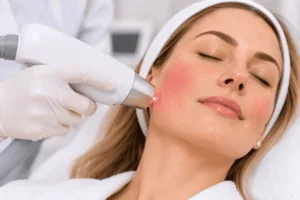
Aerolase® delivers short, high-energy laser pulses that hemoglobin inside those dilated vessels absorbs directly. The vessel wall collapses, the body naturally reabsorbs it over the following weeks, and the skin’s background color lightens as a result. This is how rosacea laser treatment works on vascular redness.
The pulse is brief enough that heat doesn’t spread widely into surrounding tissue, which matters for skin already prone to reacting. That same energy also helps quiet inflammation in the treated area, so many patients describe their skin as less reactive and less likely to flush as treatment progresses.
Which Types of Rosacea Respond Best
Rosacea does not look the same on every face, and the presentation shapes how well a laser performs.
- Erythematotelangiectatic rosacea, defined by persistent redness and visible vessels, tends to respond most predictably because the laser targets those vessels.
- Papulopustular rosacea, with its bumps and breakout-like lesions, often improves as inflammation settles, and frequently works best alongside care from a dermatologist or prescriber.
- Phymatous changes, meaning thickened tissue around the nose, usually call for a different approach.
- Ocular rosacea, which affects the eyes, belongs with an eye care provider rather than a laser.
What Results Most Patients Can Realistically Expect
Some softening of color may be visible after a single session, though the clearest change builds across a series. Most patients complete a short course of treatments spaced several weeks apart, with the exact number set during consultation based on how much visible redness is present and how long it has been there.
Results vary based on rosacea subtype, severity, trigger exposure, and individual skin history. Rosacea is a long-term condition, so periodic maintenance sessions are a normal part of the plan rather than a sign that treatment did not work.
Why Aerolase® Works for Skin That Reacts to Everything
Reactive skin is the defining feature of rosacea, so how a treatment feels is a clinical consideration, not a comfort perk. Aerolase® is designed to treat without contact or numbing cream, and most patients describe the sensation as a brief warmth passing over the face.
It is also suitable for a wide range of skin types and tones, including deeper skin tones that are often excluded from other vascular devices. Most patients return to their normal routine the same day, with any mild flushing afterward typically settling within a few hours.
Aerolase® Compared to Other Redness Treatments
Topical and prescription therapies manage inflammation and reduce flare frequency, but they do not clear vessels that are already dilated. Intense pulsed light, including the Lumecca IPL we also offer, is another vascular option, though candidacy differs by skin tone and presentation.
For a number of patients, the most effective approach combines in-office facial redness treatment with medical management of triggers and flares. The right combination is a conversation, not a default.
How to Know if Aerolase® Is Right for Your Redness
A consultation confirms the redness is rosacea and not another condition such as lupus or contact dermatitis, which can look similar at a glance. Current medications, recent sun exposure, a history of isotretinoin, pregnancy, and any active skin infection all affect candidacy and timing.
Trigger management still plays a role. Heat, alcohol, sun, and stress continue to influence how the skin behaves between sessions. If you are researching Aerolase treatment for rosacea and facial redness in Kansas City.
Common Questions About Aerolase® for Rosacea
Does it hurt, and do I need numbing?
Most patients tolerate the session well and describe a warming sensation. Numbing is generally not required.
Will my rosacea come back?
Rosacea is chronic, so redness can return over time. Maintenance sessions help hold the improvement.
How soon after a flare can I be treated?
We generally prefer to treat once an active flare has calmed, which your provider will confirm.
Can I wear makeup afterward?
Most patients can return to makeup the same day unless your provider advises otherwise.
Ready to Stop Working Around Your Redness?
Aerolase® can help with rosacea and facial redness by treating the dilated vessels and inflammation driving the color, with results that build across a short series and hold with maintenance.
The next reasonable step is a professional skin assessment so the plan fits your specific presentation. Concerned about persistent facial redness? Schedule an Aerolase consultation in Kansas City, and we will walk through your options together. Our Team will assess your skin and build a plan around what we actually se